01Clients, properties & projects
Everything starts with the job.
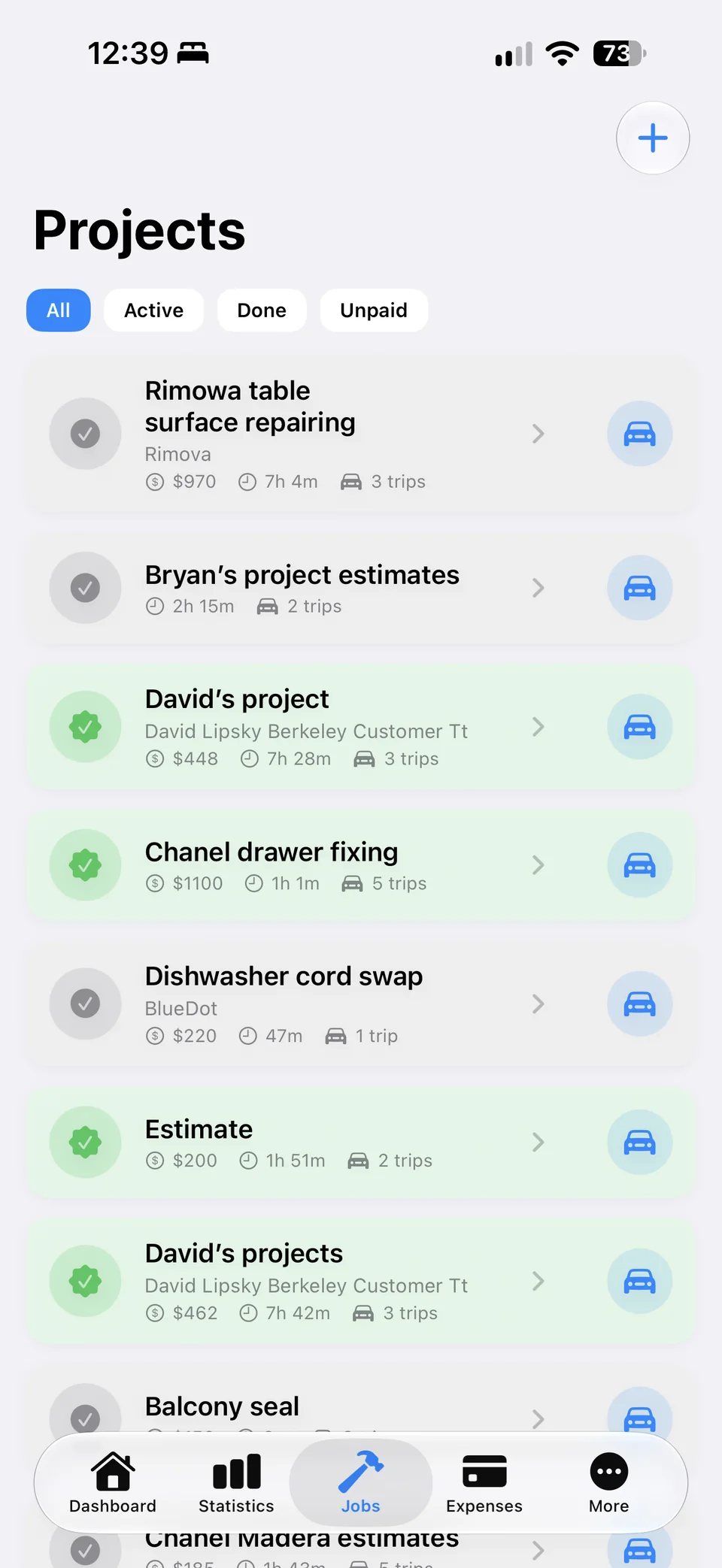
Keep clients, properties, and projects organized so you always know where the work belongs. A client may have more than one property; a property may have more than one project. Keeping those relationships clear gives every visit a useful home.
Explore clients, properties & projects ↗
02Work sessions
Track the work. Keep the context.
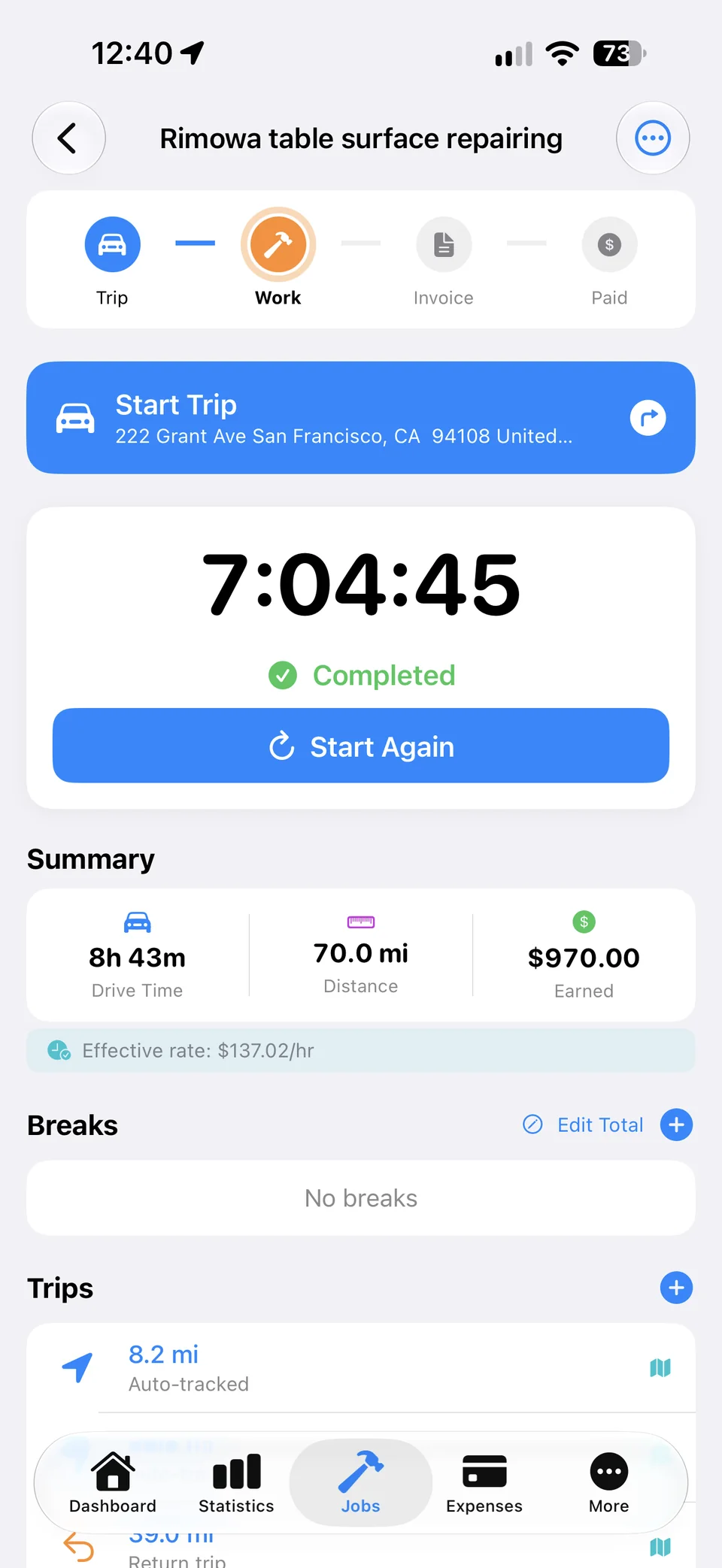
Record work sessions, manage breaks, and build a clear history of the time spent on each project. The job timer keeps the current session in view; past sessions explain how a project came together.
Explore work sessions ↗
03Travel & mileage
Your workday doesn’t stop between jobs.
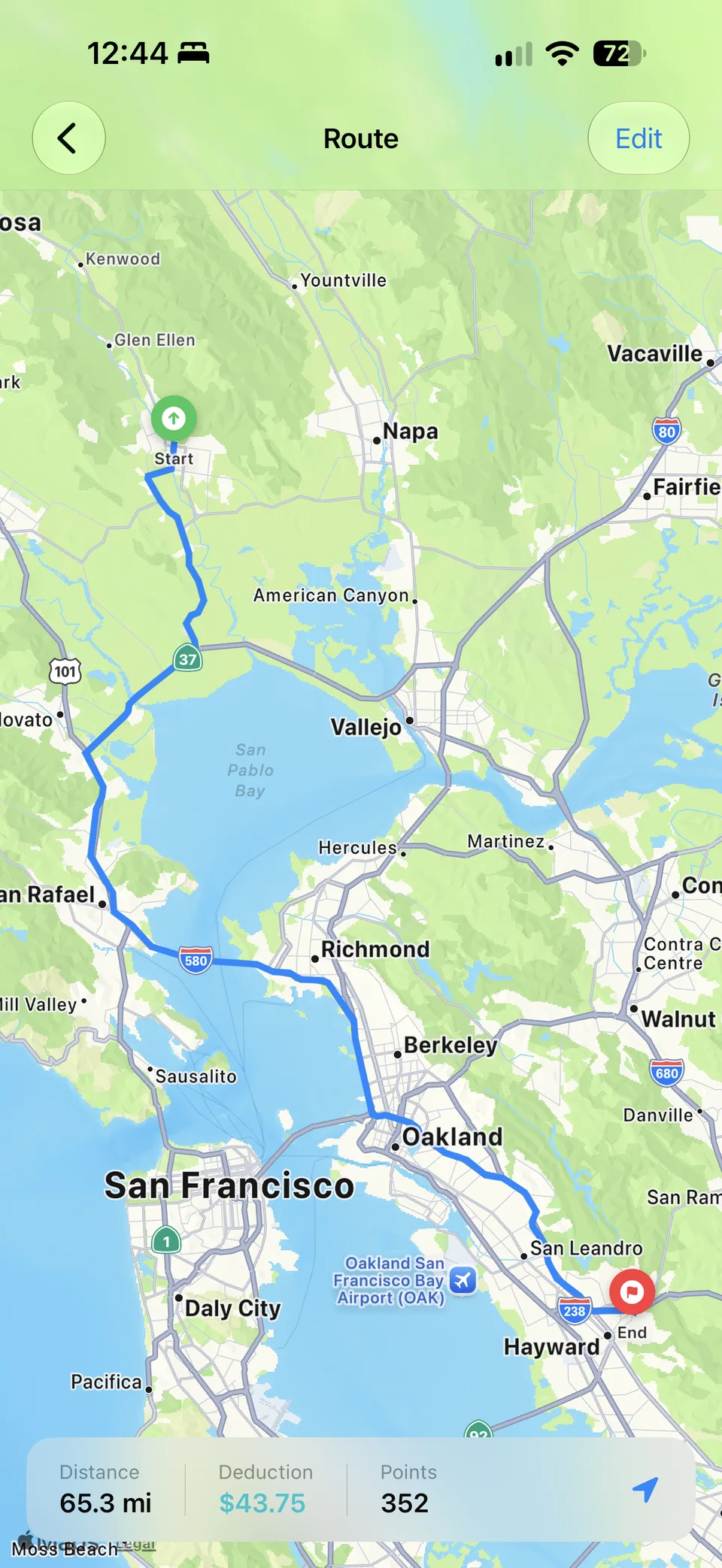
Keep travel and mileage records connected to the projects and places you visit. A trip is part of the working day, even when it happens between two appointments.
Explore travel & mileage ↗
04Expenses & materials
Know what each job really costs.
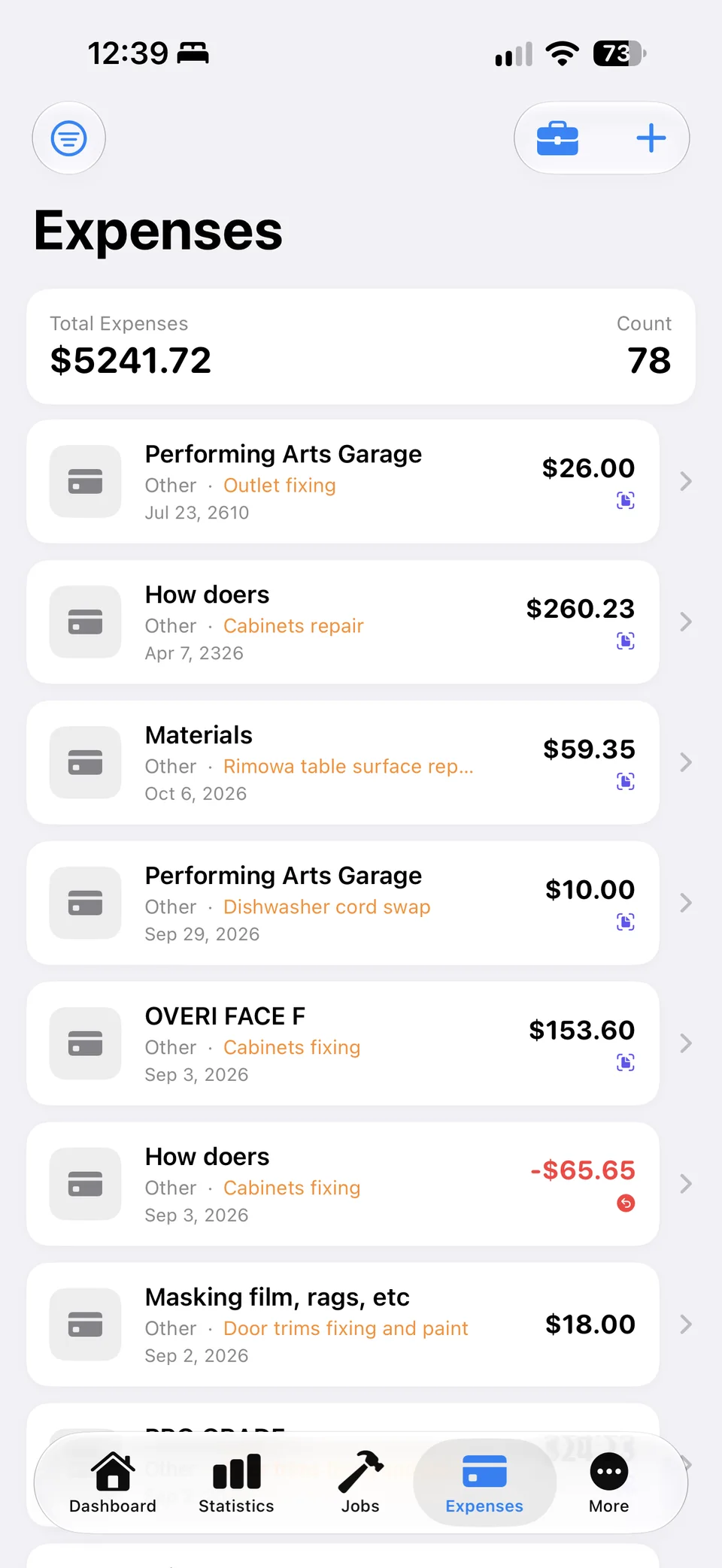
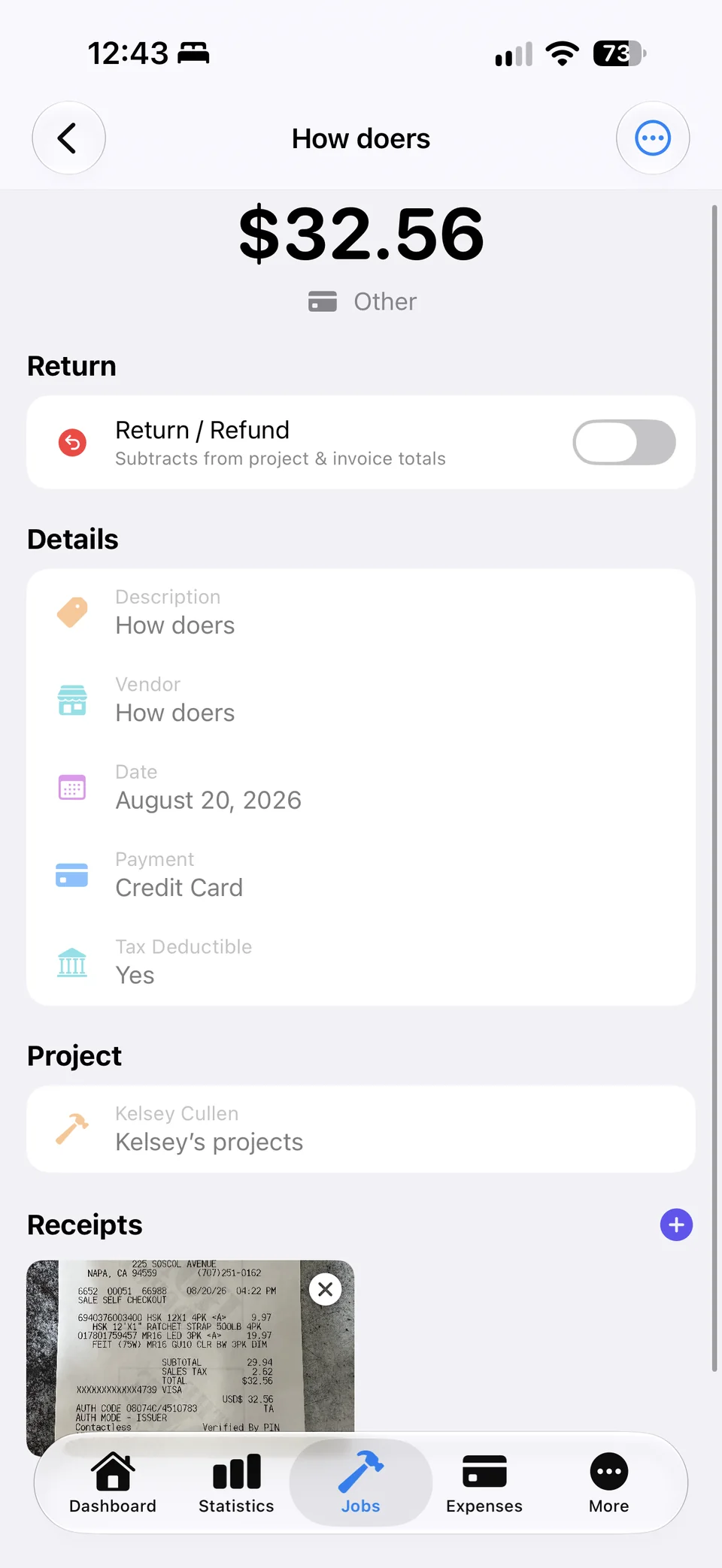
Keep expenses and purchases associated with the work they belong to. Materials, receipts, and job-related purchases are easier to understand when they sit beside the project.
Explore expenses & materials ↗
05Invoicing
From work records to invoices.
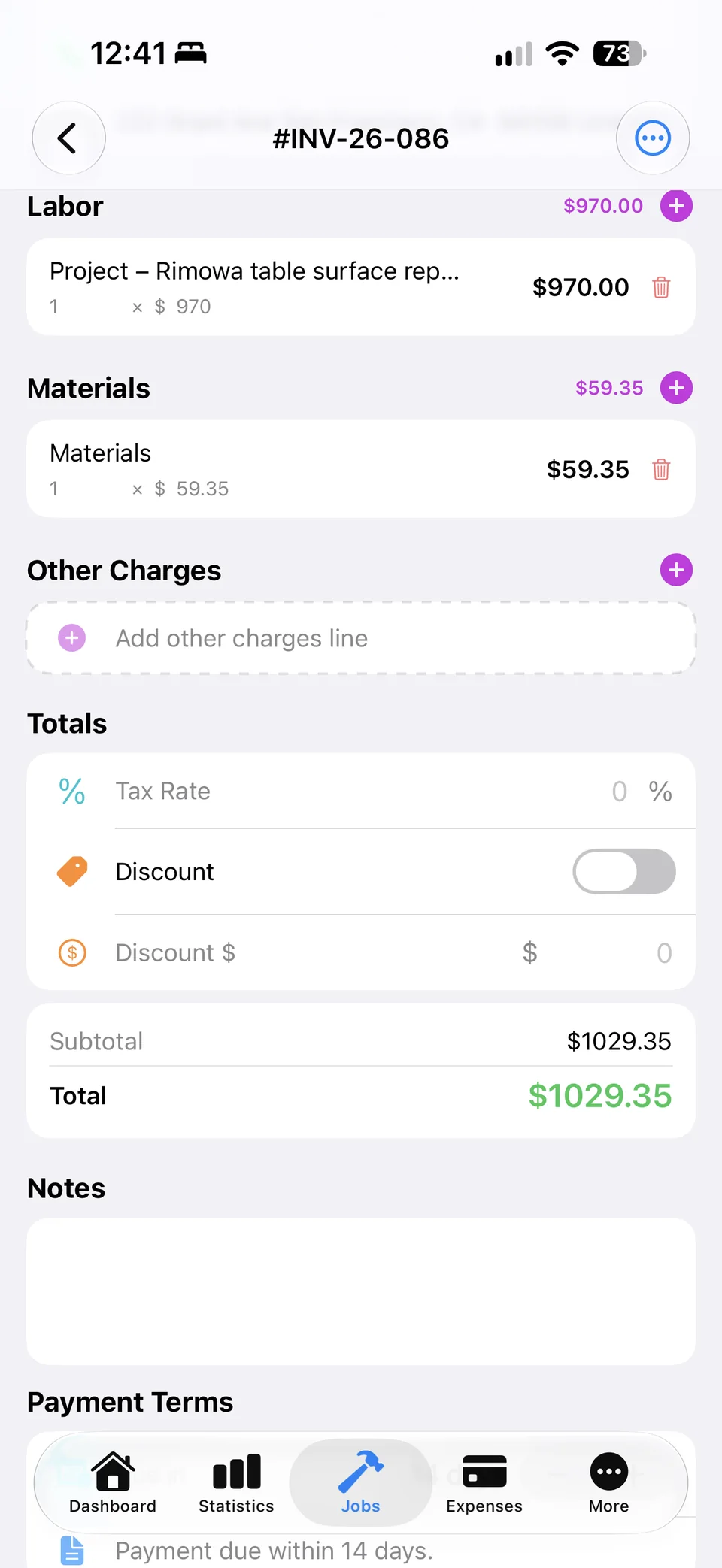
Use your recorded work, expenses, and billing information to prepare invoices with less manual effort. Hourly billing and minimum charges help reflect how you price the work.
Explore invoicing ↗
06Today dashboard
A clear view of today.
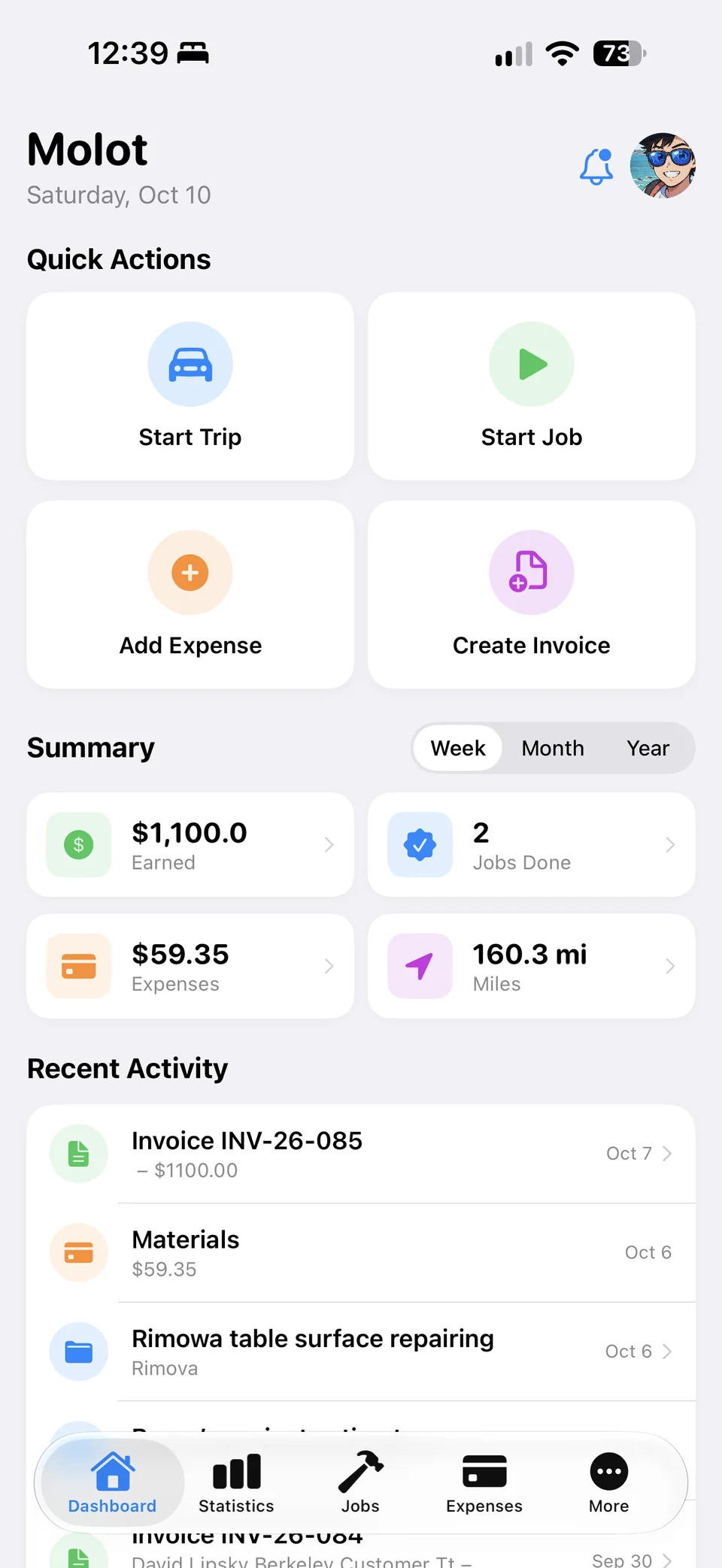
See the work that matters right now without digging through yesterday’s notes. Start a job, record a trip, add an expense, or return to recent activity from one daily starting point.
Explore today dashboard ↗